How to find influencers for your SaaS launch: the founder's system
No PR background, no existing relationships, no agency. Here is the practical system for finding, qualifying, and contacting the right influencers before your SaaS goes live.
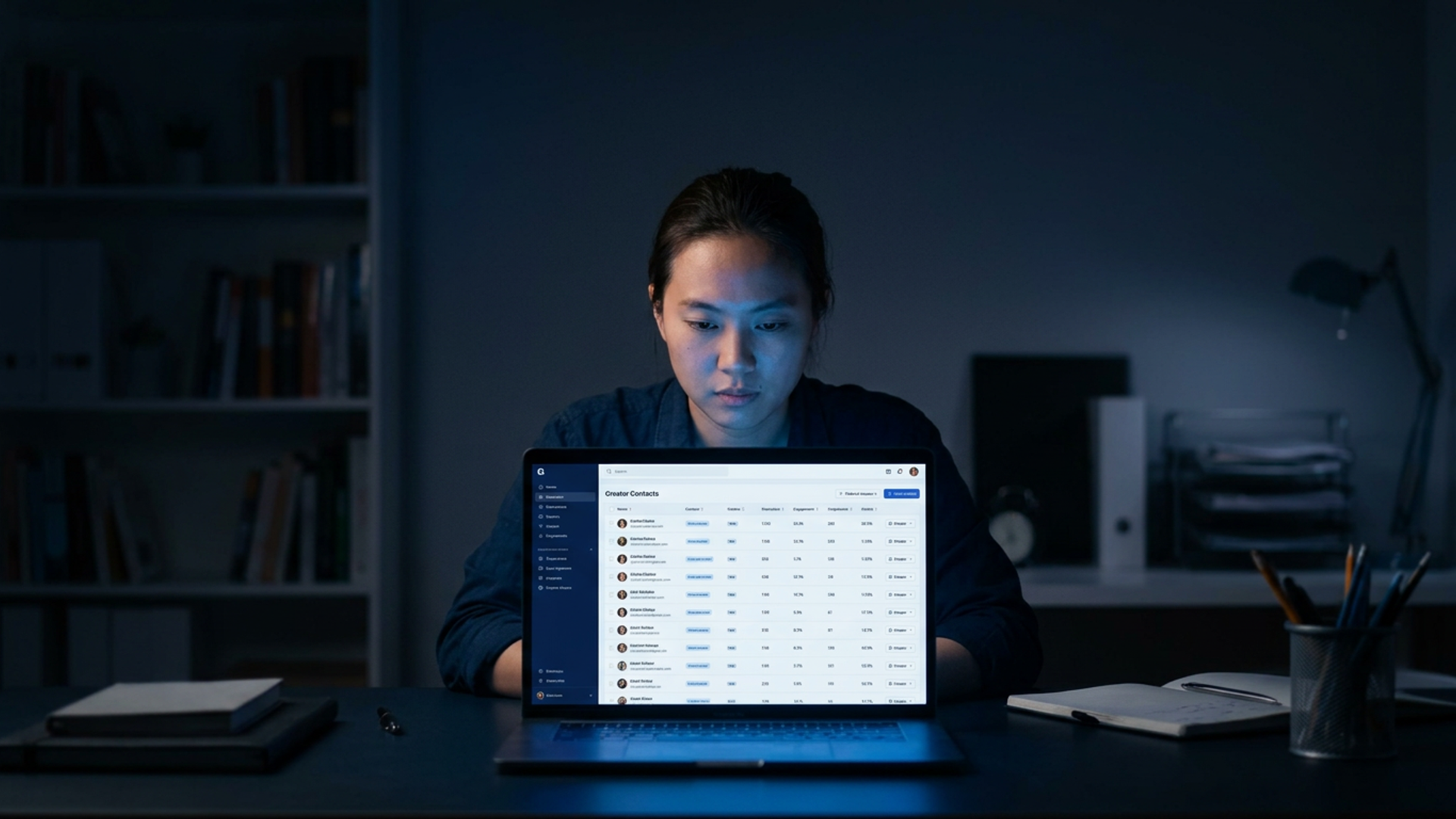
Most solo founders start the influencer search by googling "top SaaS influencers" and sending the same message to whoever shows up first. That does not work. The right system starts narrower: one sentence describing the exact pain your product removes, in the words your future users would use. Every search, every pitch, every follow-up flows from that sentence.
If you have already read the first guide or the B2B edition, this post is the practical layer underneath both. It covers why solo founders have no influencer relationships to start with, four concrete places to find the right contacts, how to qualify fast, and how to hand the search off to automation when you need to stay in builder mode.
Why solo founders start with zero influencer relationships
You spent your pre-launch months in a code editor. Not in creator forums. Not on podcasts. That is not a mistake; it is what building looks like.
The structural result: you are ready to launch and you know exactly zero people who talk about products like yours to audiences who would pay for it. Every other founder in your niche started in the same place. The ones who close that gap do it by being specific, not by being charming or well-connected.
Write that one-sentence targeting brief before you open a single search tab. "I am building a tool that removes [specific pain] for [specific user]." That sentence filters out the wrong contacts before you waste a single pitch.
Strategy 1: niche YouTubers in your problem category
YouTube is the most reliable starting point. Search the problem your product solves, not the product category. If your SaaS helps designers manage client feedback, search "client revision chaos" or "design feedback loop," not "design software."
Channels that appear consistently for those queries have audiences who are actively dealing with your problem. Before you add anyone to your list, check two things: comment quality (specific, engaged replies mean the audience acts on recommendations) and prior product coverage (if a creator has mentioned tools before, they are open to it).
Start with smaller creators. They reply faster, and their audiences trust them closely. According to Reditus's guide to SaaS influencer marketing, Notion's early creator partnerships worked precisely because the company focused on workplace technology YouTubers like Thomas Frank and Ali Abdaal, not broad tech influencers.
Strategy 2: micro-influencers on X and LinkedIn
A SaaS micro-influencer is not just a small account. It is a person whose specific following takes their recommendations seriously. A developer advocate who posts daily about API tooling will move more signups for your product than a general tech account with a much larger but less engaged following.
Three types worth prioritizing in your search:
- Practitioners who build in public. They document their own stack, their own frustrations, their own tool switches. Their audience is doing the same work.
- Toolstack reviewers. They regularly share "what I use and why." Product recommendations are native to their content, not jarring.
- Community builders. Someone running a Slack group or Discord for your target user has a tight-knit audience. A single post in a focused community can drive a meaningful number of targeted signups. That is underrated.
Search X for terms like "I use [tool in your category]" or "looking for [tool type]" to find the people already talking about the problem. The ones posting consistently are your targets.
Strategy 3: newsletter writers in your niche
Newsletter writers are one of the most underused channels for SaaS launches. A writer covering indie developer tools or no-code productivity has something most YouTubers do not: a direct inbox relationship with readers who are already in reading mode.
Find them on Substack and Beehiiv by searching your problem category. Read three or four issues before you pitch. Check who already sponsors newsletters in your category. If a competitor is sponsoring one, that writer is open to product conversations and has already filtered their audience for buying intent.
The pitch differs here. Newsletter writers care whether your product makes a good story for their readers. Lead with the real problem that drove you to build the thing, not a feature list. One sentence: the pain, who has it, and what changed when your product existed.
Strategy 4: indie hacker communities and founder forums
This strategy is different from the first three. You are not finding a creator with an audience. You are showing up where your ideal customers gather and being genuinely useful before you ask for anything.
Indie Hackers, Product Hunt's Founders' Club, and r/indiehackers are where your ICP spends time daily. Consistent, helpful participation over several weeks before launch builds credibility and surfaces the trusted voices worth pitching directly. You also pick up real language from your target users, which makes every pitch sharper.
"Your waitlist grows while you ship." Community presence is a background process, not a sprint.
How to qualify what you find
Finding names is not the bottleneck. Most founders build a list of 80 and pitch everyone. That is the wrong move.
Use this four-question filter to cut your list to a tight set of well-qualified contacts before you write a single message:
| Question | What you are looking for |
|---|---|
| Is their content about the problem, not just the category? | "Invoicing anxiety for freelancers" beats "B2B SaaS" for a billing tool |
| Do audience members leave substantive comments? | Specific replies signal an audience that acts on recommendations |
| Have they covered products like yours before? | If yes, they are open. If never, a cold pitch will feel off-brand |
| Are they reachable without a management agency? | Published email or open DMs is a warm target |
Precision beats volume here. A tight list of well-qualified contacts will outperform a long list of generic ones every time.
How to get an influencer to actually promote your product
The pitch structure matters more than most founders expect. Keep the whole message short. Creators read on their phones, between recording sessions. Long emails get archived unread.
Here is the structure that works:
- Subject line. Name something specific about their recent content. "Your breakdown of async collaboration tools" opens a door. "Partnership opportunity" goes straight to archive.
- Opening sentence. An observation, not a compliment. Connect one thing they covered to what you are building.
- The product in one sentence. The pain it removes and who it removes it for. Not a feature list.
- One offer. Early access, a lifetime free tier, or an affiliate commission with a tracked link. One offer, clearly stated.
- The opt-out. Every commercial email needs a working opt-out under CAN-SPAM. This is not optional, and it is not a courtesy. Include it every time.
Follow up once, five to seven business days later, with one new data point: a waitlist number, an early user quote, a press mention. After one follow-up, stop. A third message without a reply is noise, and it damages your sender deliverability for every future campaign.
How much do influencers charge?
Rates vary by niche, platform, and format. What is consistent in the SaaS and indie-founder space: smaller creators are often open to early access, affiliate arrangements, or lifetime free tiers rather than upfront fees. Paid sponsorships become more common as follower counts climb. For a pre-launch stage, an affiliate commission with a tracked link is often the strongest offer. It aligns incentives: the creator has a reason to mention you more than once, and you pay on actual results.
How LaunchNowAI automates this
The search itself is where most founders lose time. Building a spreadsheet from scratch, checking engagement rates, hunting for contact details, reading enough content to write a pitch that sounds human. That is multiple days of work that should be a few hours.
LaunchNowAI's Launch List does the search layer for you. Tell us your niche at checkout, and a human researcher builds you a curated list of influencers, podcasters, and newsletter writers relevant to your product. Every contact comes with audience size, engagement notes, and a one-line pitch hook based on their content so your first message sounds written for them, not copied from a template.
The Starter List is $29 one-time for 25 contacts. The Full Launch List is $149 for 50 contacts. Both arrive in 48 hours. No subscription, no outreach tool to set up.
If you need ongoing contact discovery and automated follow-up sequences, the Runway plan at $49/mo finds up to 100 contacts per month and runs every outreach batch through a compliance audit before it sends. Opt-out built in. Deliverability scoring included. Compliant by default, not by accident.
Frequently asked questions
How do I find influencers for my business without a PR background? Start with YouTube and Substack searches on the problem your product solves, not the product category. Filter to creators who have covered similar products before and whose audience leaves substantive comments. Build a focused list, then pitch with a specific subject line and one clear offer.
How do I get an influencer to promote my product? Lead with an observation about their recent content, state the pain your product removes in one sentence, and make one specific offer: early access, a free tier, or an affiliate commission. Keep the whole message short and include a working opt-out. Follow up once, five to seven days later, with something new.
Is there an AI tool to find influencers for a SaaS launch? LaunchNowAI's Launch List delivers a niche-matched contact list in 48 hours. The Starter List is $29 for 25 contacts; the Full Launch List is $149 for 50. Each contact includes engagement notes and a pitch angle, so you can send your first message the same day the list arrives.
How can I find influencers for my ads? For paid amplification, look for creators who already run affiliate or sponsored content in your niche and have transparent engagement rates. Micro-influencers in tightly focused niches typically offer stronger CPM for SaaS products than larger generalist accounts, and they are reachable without a media buyer.
Ready to skip the spreadsheet? Get your niche-matched contact list at launchnowai.com/launch-list.